“What Did I Get Myself Into?”
The Science of Trying New Things
Author: D. Howard January 30th, 2026
“What did I get myself into?”
That was the thought running through my head… more than once… tonight.
I had signed up for a somatic stress-relief class, which already felt bold. Then, immediately afterward, I realized I was starving and wandered into the nearest restaurant without checking what kind of food it served. Two brand-new experiences in one evening. Excellent decision-making. No notes.
So buckle up, kids. I’m telling you a story. And no, I don’t know how to make them short.
I recently learned about somatic therapy, a therapeutic approach that focuses on the connection between the mind and the body. I’d just completed some training in it when this class randomly popped up on my feed. Naturally, I took that as a sign from the universe and signed up without thinking through the logistics. The class was held downtown Spokane, which anyone familiar with the area knows, I was risking my life and was not prepared for what possible parking fiasco might take place.
Shockingly, I found parking immediately. A win!
I approached a tall, old brick building, silently hoping I was in the right place. Inside, there were exactly zero signs telling me where to go. The building was dim, quiet, and vaguely haunted. Even the elevator felt like it had stories. Eventually, I found a small sign pointing me to the studio and made my way in.
The room was… a vibe. Lavender in the air. Calm music. Candles on the floor. Yoga mats everywhere. The instructor introduced herself and said, “Hi, I’m Jessica.” I replied, “Hi, I’m nervous.” We both laughed, which felt like the correct response.
The class focused on breathing, grounding, and being present in the body. At various points we tapped different parts of ourselves, shook out our “stored stress,” and generally did things that, out of context, would have looked absolutely unhinged. Imagine ten fully grown adults shaking their bodies frantically in near silence. It was… something.
Ironically, while the class was about being present, I spent part of it thinking, I should really be more present right now. Then my stomach started growling, and my thoughts shifted to dinner. I also had the very meta realization that I might write a blog about being present… while actively failing to be present. Growth is messy.
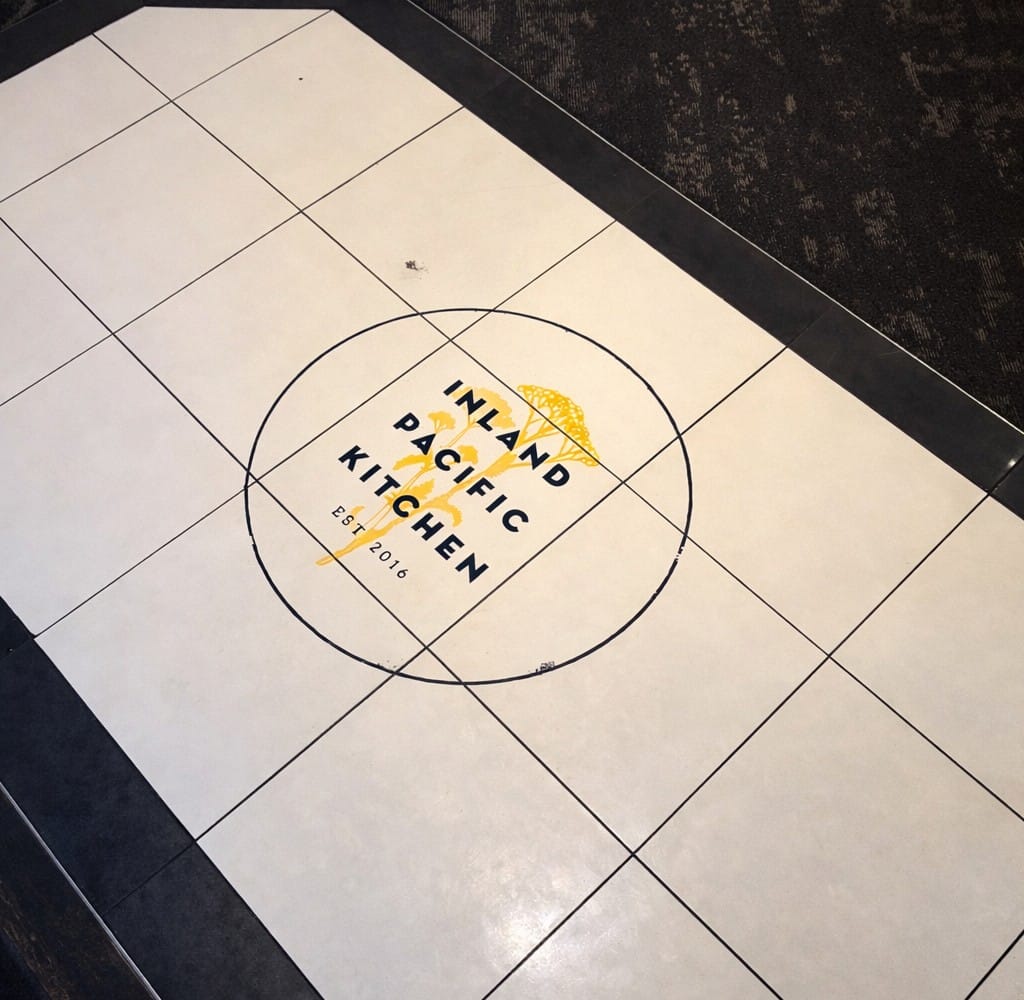
After class, I headed downstairs to the restaurant I’d noticed earlier. I had no idea what kind of place it was, but on a busy Friday night with no reservation, they somehow squeezed me in at the bar. As I scanned the menu, I realized I understood none of it. I couldn’t pronounce most of the words. I didn’t know what anything meant. Once again: What did I get myself into?
I decided to stay brave. I ordered a drink I couldn’t identify and food that listed exactly three ingredients I recognized: rice, egg, and Wagyu steak. That felt safe enough.
And honestly? My taste buds had the time of their lives. Everything was incredible. Even dessert. The novelty of flavors I’d never experienced before made the whole evening feel exciting, alive, and oddly empowering.
By the end of the night, I realized something simple but important. Trying new things — even awkward, unfamiliar, slightly uncomfortable ones — builds confidence. Not the loud, showy kind. The quiet kind that says, I can handle this.
And that’s what this blog is really about.
The Science of Trying New Things (and Why Your Brain Loves It)
Trying something new often gets framed as a big, dramatic leap. A major life change. A once-a-year vacation. But from a brain science perspective, novelty does not have to be large to matter. Small, everyday new experiences can activate the same learning, motivation, and emotional systems that light up when we travel somewhere new.
Your brain responds to novelty, not scale
The brain is wired to notice what is unfamiliar. Novel experiences activate dopamine pathways involved in motivation, attention, and learning. Dopamine is not just a “reward chemical.” It helps the brain decide what is worth paying attention to and what information should be stored.
This is why trying a new restaurant, signing up for a pottery or painting class, attending a meditation group, or showing up to a meetup you would normally avoid can feel surprisingly energizing. From the nervous system’s point of view, these experiences share something essential with travel: newness. The brain responds to novelty itself, not the size or status of the experience.
Why small new experiences feel refreshing
When you try a new restaurant, your senses are engaged in unfamiliar ways. New flavors, textures, and environments pull the brain out of autopilot. That sensory novelty increases focus and mental engagement, which is why these experiences often feel mood-lifting or mentally refreshing.
The same applies to creative or movement-based classes like painting, pottery, or meditation. Learning a new skill or being in a new setting challenges the brain just enough to promote learning. Even if you are not “good” at it, your brain is still benefiting. Mastery is not required for the neurological effect. Participation is.
Problem-solving and cognitive flexibility
Every new experience asks the brain to adapt. What do I do first? How do I follow along? What happens if I make a mistake? These small moments of adjustment activate executive functioning systems responsible for planning, decision making, and flexible thinking.
Over time, repeated exposure to novelty strengthens problem-solving skills. Instead of freezing or avoiding uncertainty, the brain becomes more practiced at figuring things out as it goes. This is one reason people often report feeling mentally “unstuck” after trying something new. Novelty trains flexibility.
Social novelty counts too
Social experiences are a powerful and often overlooked form of novelty. Attending a meetup, group class, or community event you would usually shy away from introduces new faces, new dynamics, and a degree of uncertainty.
While this can feel uncomfortable at first, moderate social novelty activates learning and emotional regulation systems rather than threat responses. Each successful exposure teaches the nervous system that uncertainty is manageable. This is similar to what happens when people travel to unfamiliar places and learn to navigate new environments.
Connecting with yourself on a deeper level
Trying new things is not only outward exploration. It also deepens self-connection. Familiar routines run on autopilot. New experiences slow that process down.
A meditation class may reveal how your body responds to stillness. A creative class might surface focus patterns, frustration tolerance, or unexpected enjoyment. Social novelty can highlight boundaries, values, or needs that are easy to miss in familiar roles.
Each experience provides feedback. Over time, this builds a more nuanced understanding of yourself, not through analysis, but through lived experience.
Stress, discomfort, and growth
Trying something new almost always involves some discomfort. That does not cancel out the benefit. In fact, manageable discomfort is part of how learning happens.
When stress stays within a tolerable range, it supports attention and memory rather than shutting the system down. Each time you step into something unfamiliar and get through it, your brain updates its expectations. Uncertainty becomes less threatening. Avoidance loses some of its pull.
Confidence is built through evidence
Confidence is not built through affirmations. It is built through experience. Each time you try something new and survive it, even awkwardly, your nervous system records that data.
The brain does not require success for confidence to grow. It requires completion. Over time, this creates a quiet, grounded sense of self-trust. Not the absence of fear, but the belief that you can handle what comes next.
Micro-novelty versus vacations
Vacations are powerful because they flood the brain with novelty. New locations, routines, foods, and experiences all at once. But most people cannot vacation often.
The good news is that the brain does not require a plane ticket. Small, intentional novelty woven into daily life can provide many of the same benefits. A new class once a week. A different café. A meetup you almost skip but decide to attend.
These “micro-novelty” experiences support motivation, cognitive flexibility, emotional regulation, and confidence between larger breaks or trips.
A practical reframe
Trying new things is not about becoming a different person or forcing yourself into activities you hate. It is about giving your brain new information.
From a scientific standpoint, your brain does not sharply distinguish between a new restaurant, a pottery class, or a trip to a new city. What matters is exposure to something unfamiliar that invites curiosity and attention.
Sometimes renewal does not come from escape. It comes from a small step sideways into something new.
What part of your life could use a small step sideways?
I went into that evening thinking I was trying a stress-relief class. I came home realizing I had also made room for curiosity, enjoyment, and a little more trust in myself.
Sometimes we get so focused on getting through the day that we forget to ask what helps us feel connected to it.
Do you need rest? More connection? Something creative? A chance to learn something simply because it interests you?
Your answer might look different from mine. It might also look different next month. Your needs, circumstances, and capacity all matter.
That’s part of the inspiration behind the Wellness Wheel I’m creating for Mindful Pathways, a guided reflection tool to help you explore the different areas of your wellbeing, notice what’s supporting you, and consider where you’d like to make more room.
You don’t need to overhaul your life. You can start with one area, one question, and one small step that fits you.
Want to hear when the Wellness Wheel is ready?
Join my email list for updates and availability.
Notify me when ready...
Get updates on the upcoming six-part Wellness Wheel series from Mindful Pathways Co. and be notified when it’s available.
References
Bunzeck, N., & Düzel, E. (2006). Absolute coding of stimulus novelty in the human substantia nigra/VTA. Neuron, 51(3), 369–379. https://doi.org/10.1016/j.neuron.2006.06.021
Costa, V. D., Tran, V. L., Turchi, J., & Averbeck, B. B. (2014). Dopamine modulates novelty seeking behavior during decision making. Behavioral Neuroscience, 128(5), 556–566. https://doi.org/10.1037/a0037128
Duszkiewicz, A. J., McNamara, C. G., Takeuchi, T., & Genzel, L. (2019). Novelty and dopaminergic modulation of memory persistence: A tale of two systems. Trends in Neurosciences, 42(2), 102–114. https://doi.org/10.1016/j.tins.2018.10.002
Fredrickson, B. L. (1998). What good are positive emotions? Review of General Psychology, 2(3), 300–319. https://doi.org/10.1037/1089-2680.2.3.300
Kandel, E. R., Dudai, Y., & Mayford, M. R. (2014). The molecular and systems biology of memory. Cell, 157(1), 163–186. https://doi.org/10.1016/j.cell.2014.03.001
Lisman, J. E., Grace, A. A., & Duzel, E. (2011). A neoHebbian framework for episodic memory; role of dopamine-dependent late LTP. Trends in Neurosciences, 34(10), 536–547. https://doi.org/10.1016/j.tins.2011.07.006
McEwen, B. S., & Akil, H. (2020). Revisiting the stress concept: Implications for affective disorders. The Journal of Neuroscience, 40(1), 12–21. https://doi.org/10.1523/JNEUROSCI.0733-19.2019
Shohamy, D., & Adcock, R. A. (2010). Dopamine and adaptive memory. Trends in Cognitive Sciences, 14(10), 464–472. https://doi.org/10.1016/j.tics.2010.08.002
Takeuchi, T., Duszkiewicz, A. J., Sonneborn, A., et al. (2016). Locus coeruleus and dopaminergic consolidation of everyday memory. Nature, 537, 357–362. https://doi.org/10.1038/nature19325
van Praag, H., Kempermann, G., & Gage, F. H. (2000). Neural consequences of environmental enrichment. Nature Reviews Neuroscience, 1(3), 191–198. https://doi.org/10.1038/35044558
Newsletter
Subscribe to receive practical resources, reflections, and updates on new products and services. Designed to support growth, well-being, and meaningful progress.


Created with ©systeme.io